
Why Hardening Structures Changes Everything
When resilience is quantified correctly, insurance pricing follows.

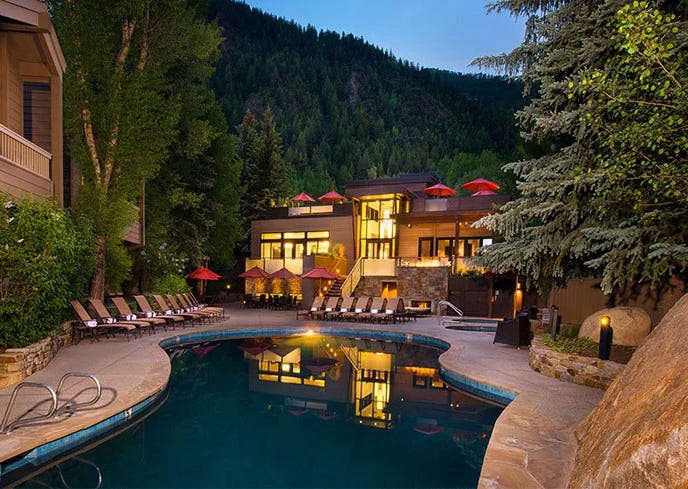
Photo: The Gant Aspen
As far as I’m concerned, there’s one statistic that reframes the entire wildfire insurance conversation:
Hardened structures are more than three times as likely to survive a wildfire as their non-hardened counterparts.
Post-fire assessments made the case. After the 2018 Camp Fire – which destroyed more than 18,000 structures in Paradise, California – homes built to modern Wildland-Urban Interface (WUI) standards survived at more than three times the rate of older construction. Analyses of WUI building code performance by organizations like Headwaters Economics and others showed a clear economic and survival advantage tied directly to hardened construction.
And yet, survival statistics alone don’t automatically translate into lower insurance premiums.
Wildfires Don’t Destroy Buildings the Way Most People Think
When most people picture wildfire loss, they imagine walls of flame engulfing structures. But we know that’s not how it works. Research from the U.S. Fire Administration reveals that the majority of home ignitions during wildfires are actually caused by wind-driven embers versus direct flame contact. These embers can travel miles ahead of the fire front, landing on roofs, slipping through vents, and accumulating on decks and eaves.
Effective home hardening is about shutting those entry points down and building with ember-resistant materials. One recent analysis on the destructive impacts of wildfire to structures looked at five major historical WUI fires and showed that home hardening and defensible space could reduce structure loss by up to 52%.
So if the physics are so well understood, why has insurance pricing historically lagged behind?
Upgrades That Change Outcomes
For years, wildfire insurance was priced mostly by location. But as losses have surged, carriers are under growing pressure to distinguish between properties that are simply exposed and those that have been meaningfully hardened.
That’s why one of our areas of focus at RockRose Risk is on translating hardening investments into underwriting-ready signals. Because only documented mitigation that reflects the real risk picture of a property can change pricing.
Fire science and post-incident data consistently point to structural improvements that materially reduce ignition risk. These are reflected in today’s WUI building code standards and IBHS’s Wildfire Prepared Home framework.
The most impactful upgrades include:
Class A roofs (metal, tile, or composition) instead of wood shingles
Ember-resistant vents with fine metal mesh
Dual-pane tempered windows that better resist radiant heat
Enclosed eaves and soffits to prevent ember intrusion
Non-combustible siding and decking materials
And when these upgrades are properly measured and translated, the impact can be dramatic.
The Gant Aspen: Rebuilding the Risk Profile
The Gant Aspen offers us a great real-world example of how structural hardening changes can be quantified to influence insurance outcomes.
Located on five acres at the base of Aspen Mountain, The Gant operates as a luxury condominium resort with a complex HOA structure (a combination that creates a uniquely challenging insurance profile in a wildfire-exposed region.)
The Gant had been investing meaningfully in structural hardening and wildfire mitigation for years. But as Colorado’s market tightened and carriers pulled back, their premiums surged to more than eight times historic levels – even as the property itself became safer. We’re talking about hardening work that included:
Structural ignition-resistant upgrades
Defensible space expansion and maintenance
Vegetation management and fuels reduction
Modernized building components aligned with WUI standards
Ongoing property-level mitigation planning
Legacy underwriting models continued to default to location-based risk assumptions. The market saw “Aspen + wildfire exposure” and couldn’t see its measurable hardening efforts.
Enter RockRose to reconstruct the property’s true wildfire profile. That meant walking the property and conducting detailed structural assessments. It meant analyzing vegetation, fuels, and topography in real time. We ran fire-behavior simulations to understand how a wildfire would actually move across the site. We documented ember-resistant features and ignition-resistant upgrades. We measured defensible space performance. And we built a forward-looking mitigation roadmap to show where the property stood AND where it was headed.
In short: we rebuilt the underwriting narrative using verifiable field data and actuarially defensible modeling, which turned their hardening efforts into hard numbers.
Gant Aspen’s GM Donnie Lee said it best, “RockRose helped translate our on-the-ground improvements into a clear risk story that underwriters could finally understand.”
The outcome was immediate and meaningful:
43.6% reduction in total insurance cost
$911,598 in premium savings
Previous premium: Over $2 million. New total cost: $1.17 million.
Beyond this tremendous cost reduction, the Gant has been able to reinvest in continued mitigation and hardening efforts that will protect their property and their surrounding community. This is what I mean when I talk about building and investing in virtuous cycles.
Hardening won’t change pricing on its own. The Gant proved that when mitigation is quantified and translated properly, premiums follow. That is where wildfire insurance is headed, and it’s where I’m building.
Want help translating your mitigation efforts into lower premiums? Let’s talk.
Follow along for future posts as I dive deeper into where the future of proactive protection is headed and how we can reimagine insurance for a new era of risk.